

The worst thing that can happen to a growing company is that its systems work.
Not sort of work — really work — really, really hard. Your approval process ensures nothing falls through the cracks. Your decision framework means every choice gets proper review. Everything runs smoothly.
Because everything runs through you.
You built systems that work — by making you the bottleneck. It's a cage disguised as organizational structure.
And like most cages, it gets built one reasonable decision at a time:
Take approval processes. You implement one after a junior hire makes a pricing decision that costs you a major client. Completely reasonable — you need oversight. So you create a simple rule: pricing changes over $X need your sign-off.
Then it expands. Sales wants approval clarity for discounts—makes sense. Marketing sees this and asks for the same on campaign budgets. Product needs it for roadmap commitments. Each request is reasonable. Each routes another decision through you.
Six months later, you're the blocker on twenty different approval chains. And you can't remove any single one without risking the mistake that made you create it in the first place.
This is how control ends up masquerading as leadership. Instead of leading, you end up gatekeeping. The company isn't truly scaling—you're just replicating yourself across every decision, and there's only one of you.
Most executives I work with can intuit that they're the bottleneck. They genuinely want to develop their people and delegate more. But when they look at their dashboard, what do they see? Tasks completed. Velocity metrics. Revenue per employee.
These are metrics that are easy to measure. But none of them tell you if your people are actually growing.
Factory Metrics for Forest Systems
So we end up trying to grow humans using measurements designed for machines.
Which makes sense if you think about where these measurements come from: factories. A factory is predictable. You optimize for efficiency. You eliminate deviations. When something breaks, you fix it. The goal is predictable, reliable consistency at scale.
A forest, on the other hand, is alive. It grows through relationships you can't see: roots sharing nutrients across species, fungi connecting entire ecosystems. You can't force a tree to grow faster by pulling on it. You create conditions so that the entire ecosystem develops over time.
Your people are like a forest. But all your metrics were designed to measure the inputs and outputs of a factory - machines!
Think about what actually determines if your company scales:
Can your team make good decisions without you? Do they see how their work creates value? Can they navigate ambiguity and conflict productively? Will your best people still be here in a year?
These are forest questions. But you have no dashboard for them.
And as the saying goes, when you can't measure something, you can't manage it. So you end up ignorant about it.
Add to that the fact that our brains are biologically wired to avoid discomfort and conflict. The negative bias that kept our ancestors alive by helping them spot threats makes us dodge the very conversations that contain new energy, new information, and breakthrough solutions in modern-day business.
Think about Lennon and McCartney — their creative friction produced brilliance. But most leaders spend their entire days smoothing over tension within their teams before the magic can really happen.
Human development shows up in lagging indicators. By the time you see it in retention data or execution quality, your best people are already interviewing elsewhere. But efficiency metrics update in real-time. So you optimize what you can see and ignore what actually matters.
By then, your best people are already interviewing elsewhere or gone.
The Real Cost
I watched this play out with a tech CEO last year. Former engineer who'd learned to sell. He'd built proper systems—the kind consultants would approve of. And his team was sharp.
But he was working harder at 50 employees than he had at 15.
Every big decision still needed him—customer escalations, pricing calls, strategic reviews all landed on his desk. Which meant his VP of Engineering stopped proposing ambitious projects. Why bother when approval dragged on for weeks? And to add insult to injury, two senior developers had already left for companies where they could "actually make decisions" (their words).
When I asked him why he couldn't let go, he said something revealing: 'I need to know that things won't break.'
There it is. The real reason smart leaders default to a factory-style approach.
It's not that they don't trust their people. It's that tracking efficiency metrics (the factory) feels safe. These kinds of metrics give you “certainty.” You can see immediately if something breaks. You can fix it. You can prevent it from breaking again.
Developing people is different. You can't really quantify human growth. And you can forget about putting it on a dashboard. You can't guarantee specific outcomes. Instead, you create conditions, remove obstacles, and trust the system to grow and evolve. This requires tolerating uncertainty.
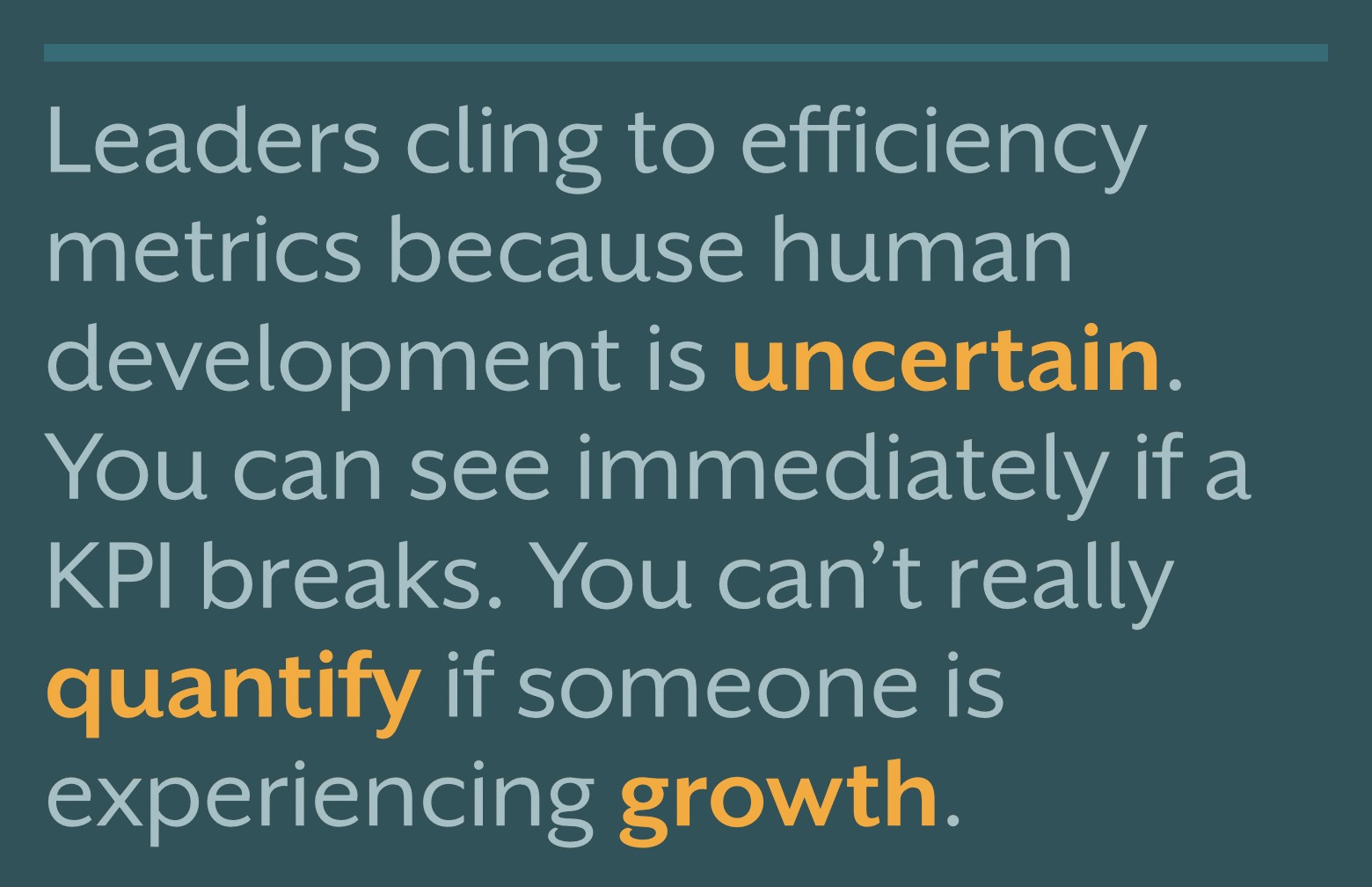
But our brains hate uncertainty. We're wired to scan for threats, to control variables, to prevent bad outcomes. Measuring tasks and outputs feels safer because it gives us the illusion of control.
Our tech CEO’s VP had already stopped growing months ago. She had no room. Every decision that would have stretched her capacity got routed to him instead. By keeping control, he was preventing her from developing the capacity to take it from him.
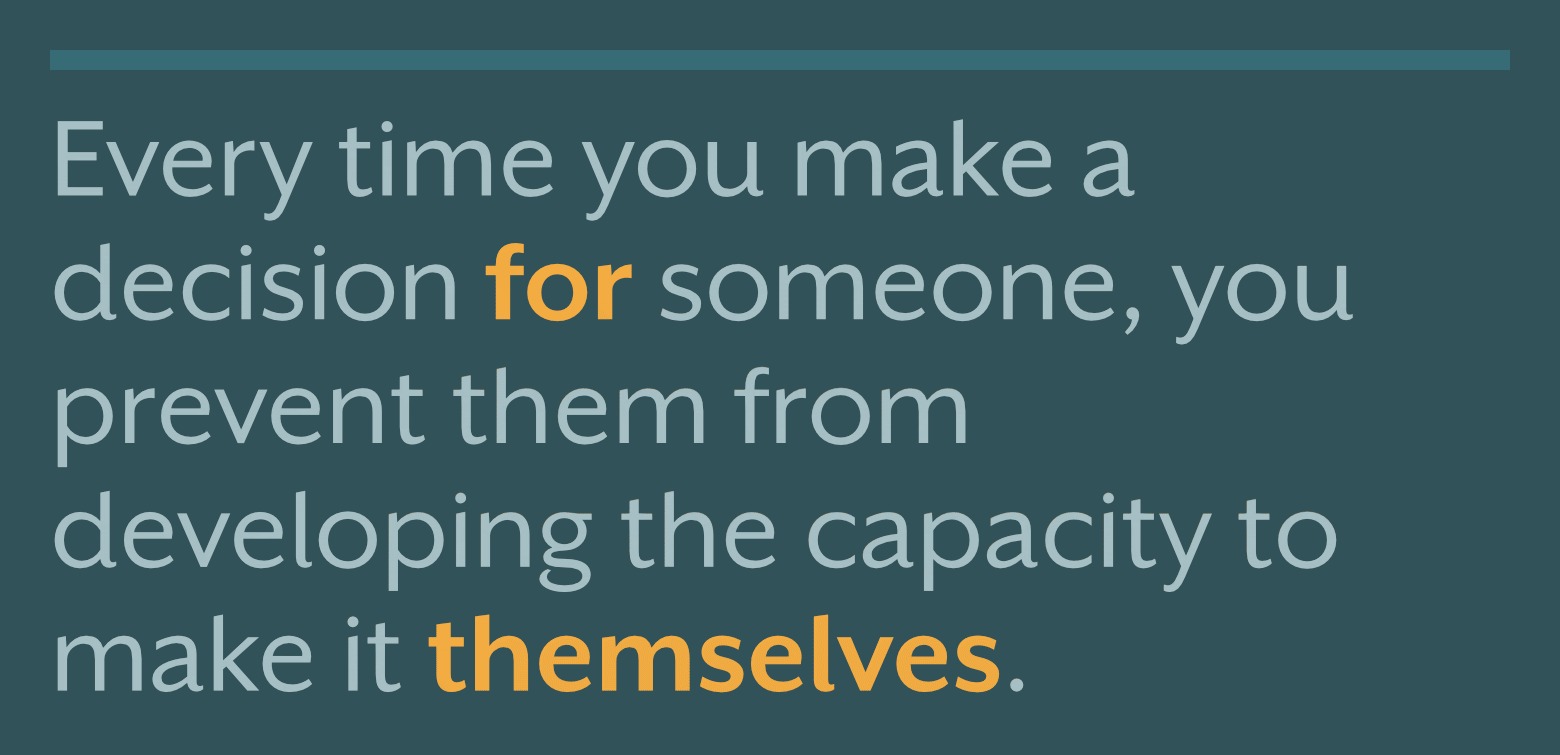
By the time he could finally measure the cost—one line in his retention data—she was gone.
Why "Soft Skills" Language Keeps Failing You
When we call it "putting humans first," it sounds like a nice-to-have. Something for when you have extra bandwidth. A feel-good initiative for the next offsite.
This “feel-good” framing is exactly why it fails.
What a human-first approach actually is: Where profit actually comes from.
The false dichotomy keeping you stuck is this: Leaders think they have to choose between profit OR people. That's factory thinking. It's also completely backwards.
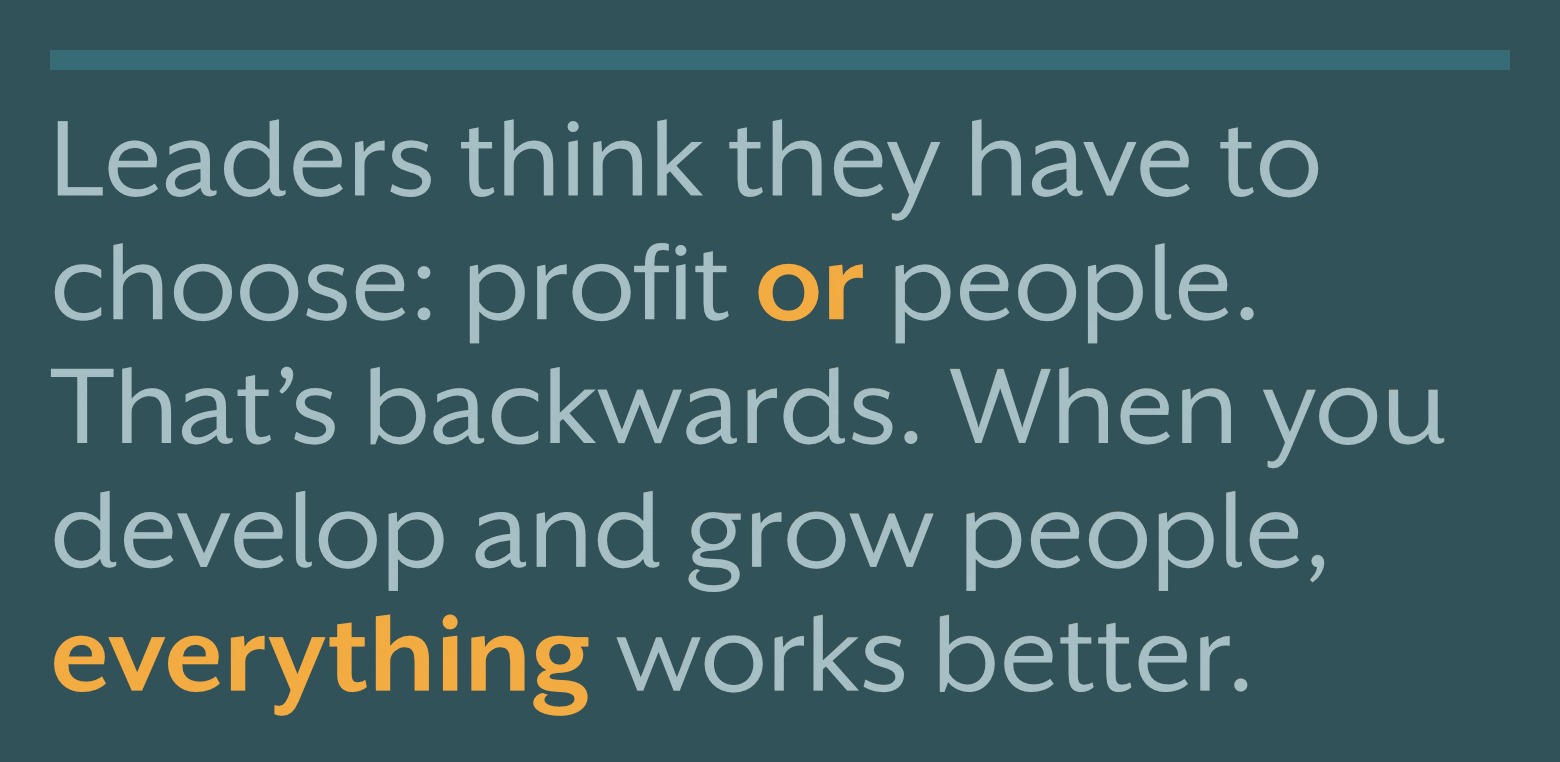
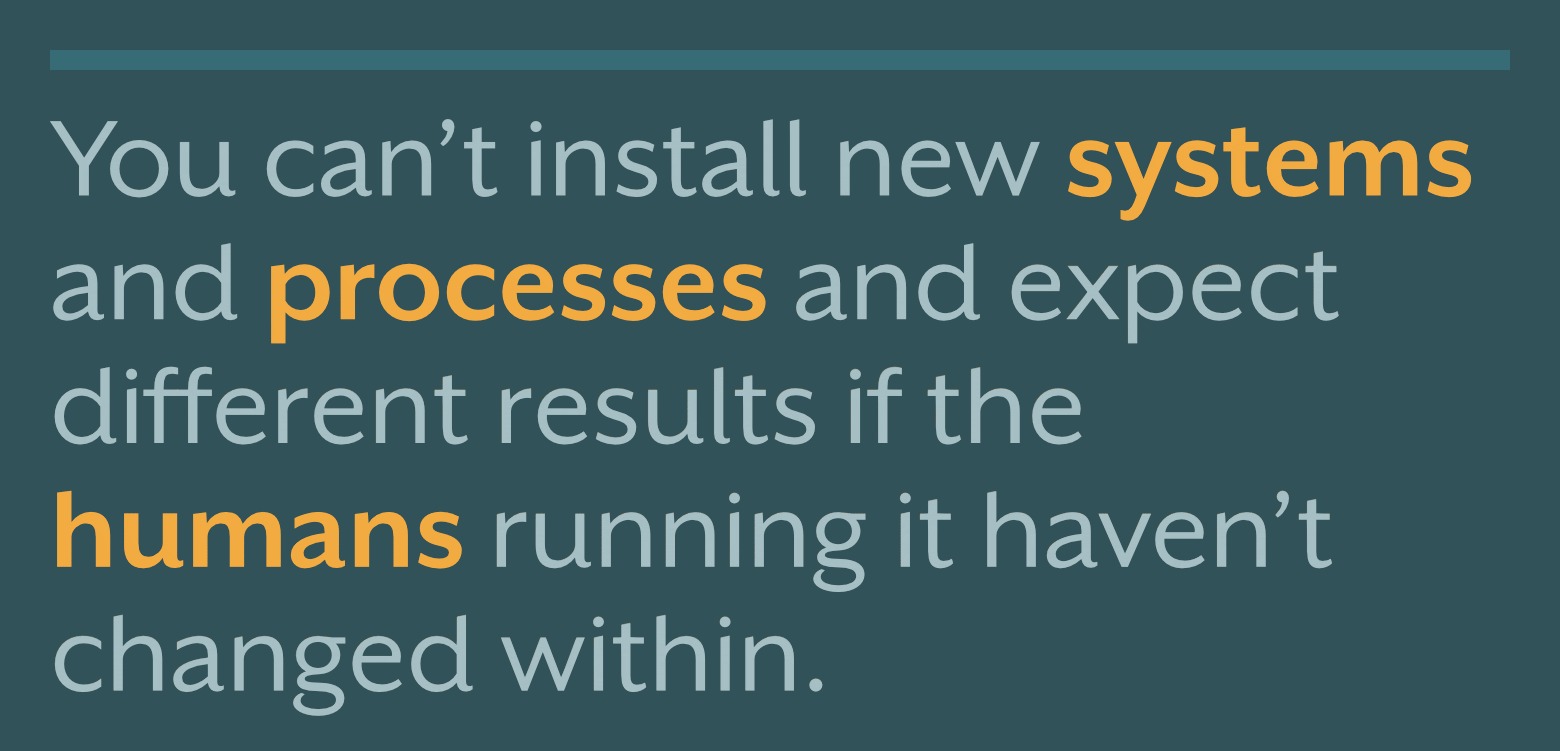
When you support and develop humans, your systems can evolve to also work better. When you only fix systems, they often break again—because the humans running them haven't changed.
I recently read about a manufacturing company that spent $50K implementing EOS. They got the dashboards set up, started running the weekly Level 10 meetings, followed the scorecard religiously. And some things did improve—they had better visibility into metrics, clearer quarterly goals.
But six months in, the leadership team was exhausted. The framework created more meetings about meetings. The rigid structure felt bureaucratic instead of empowering. The team resented that it didn't fit their culture or stage of growth. The expensive tools became reminders of what they were behind on, not enablers of progress.
Why? Because they'd installed a system without transforming how the leaders showed up. They were still operating in reactive mode—just with more structured ways to firefight, micromanage, and avoid the hard conversations about accountability.
The misconception is that human-first work is soft and slow. Actually, that's how you get speed and scale.
But mindset work alone doesn't stick. You can't think your way into a new operating system while the infrastructure around you still measures and rewards the old behaviors.
We need systems to evolve too, not just new thinking.
The Infrastructure Gap: Making Intangibles Tangible
Most leadership development stops at awareness. You go to a retreat, have some breakthroughs, come back inspired—and within two weeks, you're right back in the same patterns.
Why? Because the system that measures success hasn't evolved.
This gap is exactly why we partnered with Insights7. Factory metrics track tangible assets—the machinery, the outputs. But forests need different infrastructure. Insights7 tracks BOTH tangible AND intangible assets—giving you a way to begin to track how living systems actually create value.
Instead of just measuring activity (meetings held, tasks completed, hours logged), you see value creation flow. Everyone in your organization can see how their work creates value—not just activity and output, but actual impact toward outcomes that matter.
Your organization isn't fundamentally a factory. It's more like a forest—one that must be both stable AND dynamic. It's a living system that needs infrastructure designed for humans, not machines.
A forest isn't chaotic. It has structure—root systems, nutrient cycles, symbiotic relationships. But that structure enables life, it doesn't control it or destroy it. When you build infrastructure that reveals how value flows through your organization, you're finally making the intangible tangible.
Your people can see their impact. They can make decisions based on shared context and value creation criteria, not just following procedures. They can adapt without always waiting for permission.
That's when scaling gains true momentum—when you're cultivating the forest, not reinforcing the cage.
The Way Out
So how do you escape the cage you've built—one reasonable decision at a time?
You can't just remove all your systems—that's how things break. And working harder to review everything faster only leads to burnout.
The shift is this: Stop asking "How do I control this better?" Start asking "What does this person need to see to make good decisions?"
That question changes everything.
Pick one decision type that currently routes through you. Not the riskiest one—pick something meaningful but contained. Then get specific: What would your VP need to see to make a good decision?
Not what they need to know—that's just information transfer, and you're already doing that. What do they need to see? What context do they need to understand? How this decision connects to customer outcomes. How it affects other teams. How it impacts the numbers that actually matter.
This is the difference between factory metrics and forest infrastructure.
Factory metrics tell you what happened: tasks completed, deals closed, velocity achieved.
Forest infrastructure shows you how value flows: how decisions ripple through the system, how work connects to outcomes, how people's contributions create impact beyond their immediate role.
When your team can see these connections—really see them, not just hear about them in meetings—they stop needing you to approve everything. They can see whether they're making the right call.
This is what we mean by making intangibles tangible. Trust isn't measured by surveys. It's visible when someone makes a good decision you didn't review. Strategic thinking capacity isn't tracked on a dashboard. It shows up when your team spots opportunities you haven't seen yet. Innovation velocity isn't a metric. It's what happens when people feel safe enough to engage with healthy conflict instead of smoothing everything over.
The outcomes our clients see:
Time reclaimed. Hours freed from being the bottleneck, redirected to work only you can do.
Money recovered. Reduced turnover costs. Faster revenue growth—not from hustling harder, but from removing what's in the way. Better ROI on your existing talent.
Energy restored. The grind lightens. Your people stay engaged because they can finally use their whole intelligence. You stop bleeding capacity and start building it.
Across our clients, we've measured:
- 2x increase in leaders who execute without escalation
- 40% decline in burnout indicators
- 77% surge in leaders who solve problems independently
- 117% growth rate in strategic + tactical leadership capacity
One client went from $300K to $45M in fundraising after making this shift. Not because they added more systems. Because they changed what they measured and gave their people the infrastructure to see value flow.
You can scale to 8+ figures without being the bottleneck. You can get your time back. You can build something valuable that doesn't depend entirely on you.
Not a cage. A forest.
Ready to stop being the approval bottleneck?
Book a consultation with Karen to discover how infrastructure that reveals value flow—not just tracks outputs—transforms how you scale without losing your best people.